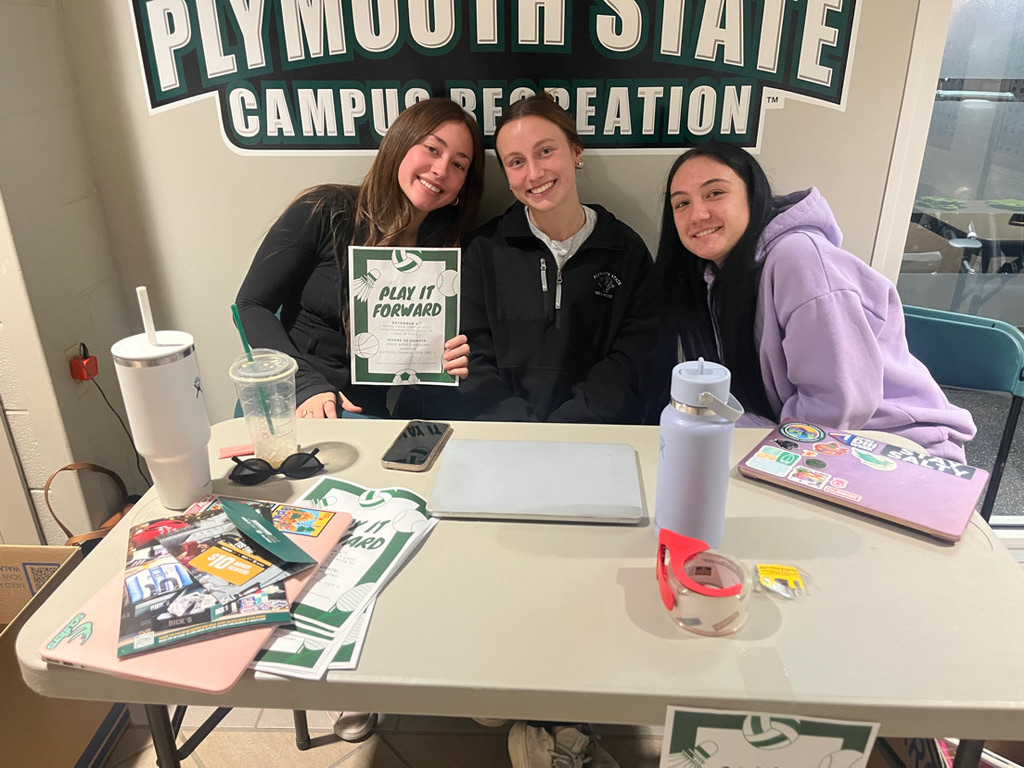
As I wrapped up my Signature Project, a sports clothing drive called Play it Forward, we finally got to see the idea move from planning into real action. The final stage of the project took place at a table we set up in the HUB, right in front of the gym. We were positioned next to another group from class whose project focused on how polyester clothing is harming the environment, which created an interesting contrast between our tables. While their messaging focused on discouraging certain types of clothing, mine centered on giving clothing a second life to help student-athletes who can’t always afford gear. Setting up the display, arranging the donation bin, and preparing informational materials made me realize how much my project had grown from a simple idea to something with real community impact.
One of the biggest realities we faced that day was the turnout, or lack thereof. We only received a few donations from students passing through the HUB. It was a little discouraging at first; I had imagined more interaction and more people bringing gear. However, the low turnout compelled me to employ the Habit of Mind: Inquire & Seek Evidence. Instead of just assuming we had “failed,” I paid attention to what was happening around us. The HUB at that time of day had mostly students rushing to class or the gym, not necessarily people carrying extra clothing or thinking about donating. That observation helped me understand that environmental factors: timing, foot traffic, and convenience, matter just as much as motivation. In another setting or schedule, we might have collected more. I also think that advertising it more and having drop boxes out for longer would have brought in more donations.
Despite the low student turnout, we did receive one of the most unexpected donations of the day: our professor gave us three pairs of skis and a pair of skates. This donation became a highlight of the project, showing that even if the audience isn’t the one you expect, people still respond to a meaningful cause. It also pushed me to think critically about the Habit of Mind Integrative Perspective. Even though I had planned the drive with student-athletes in mind, the professor’s donation reminded me that community needs aren’t limited to one group. There are students on campus and even families in the local community who could benefit from winter sports equipment. It broadened how I understood the purpose of the drive and who it could support.
The final steps of the project were small but meaningful. After the tabling event, I collected the items we received and prepared them for distribution. Even though the overall amount was smaller than I expected, I still wanted to make sure everything was organized, clean, and ready to be used. Doing this required self-regulated learning: staying committed even when the results weren’t dramatic, following through on the goals I set, and not letting low turnout diminish the value of the project. This reflects a line from a community engagement reading earlier in the semester: “Impact is not measured only by scale, but by intention, clarity, and connection.” I kept returning to that idea as I reflected on what the project accomplished.
The reception from the people who did interact with the table was positive. A handful of students asked questions about where the donations would go, and a few even said they wished they had known earlier so they could bring items. This feedback showed me the importance of purposeful communication: clearer social media promotion, earlier advertising, or mobile collection options could have brought more engagement. Even though the table didn’t draw a huge crowd, the conversations we did have were meaningful and showed that the project resonated with people. The professor’s donation also demonstrated that the idea had enough value to inspire action—even if it wasn’t the action I originally predicted.
Overall, the final outcome of my Signature Project wasn’t massive in numbers, but it was meaningful in experience. I learned how to take an idea from concept to implementation, adjust to challenges on the spot, observe audience behavior, and reflect honestly on what worked and what didn’t. Most importantly, the project made me more aware of the skills I’m building for my future in exercise science and OT: communication, adaptability, planning, and community-centered thinking. The sports clothing drive may not have filled an entire room with donations, but it filled a real need, and it gave me a clearer sense of the kind of professional I want to become.

Leave a Reply